Executive Summary: March 12th PR Energy Week Municipal Action Challenge in San Juan
Overview
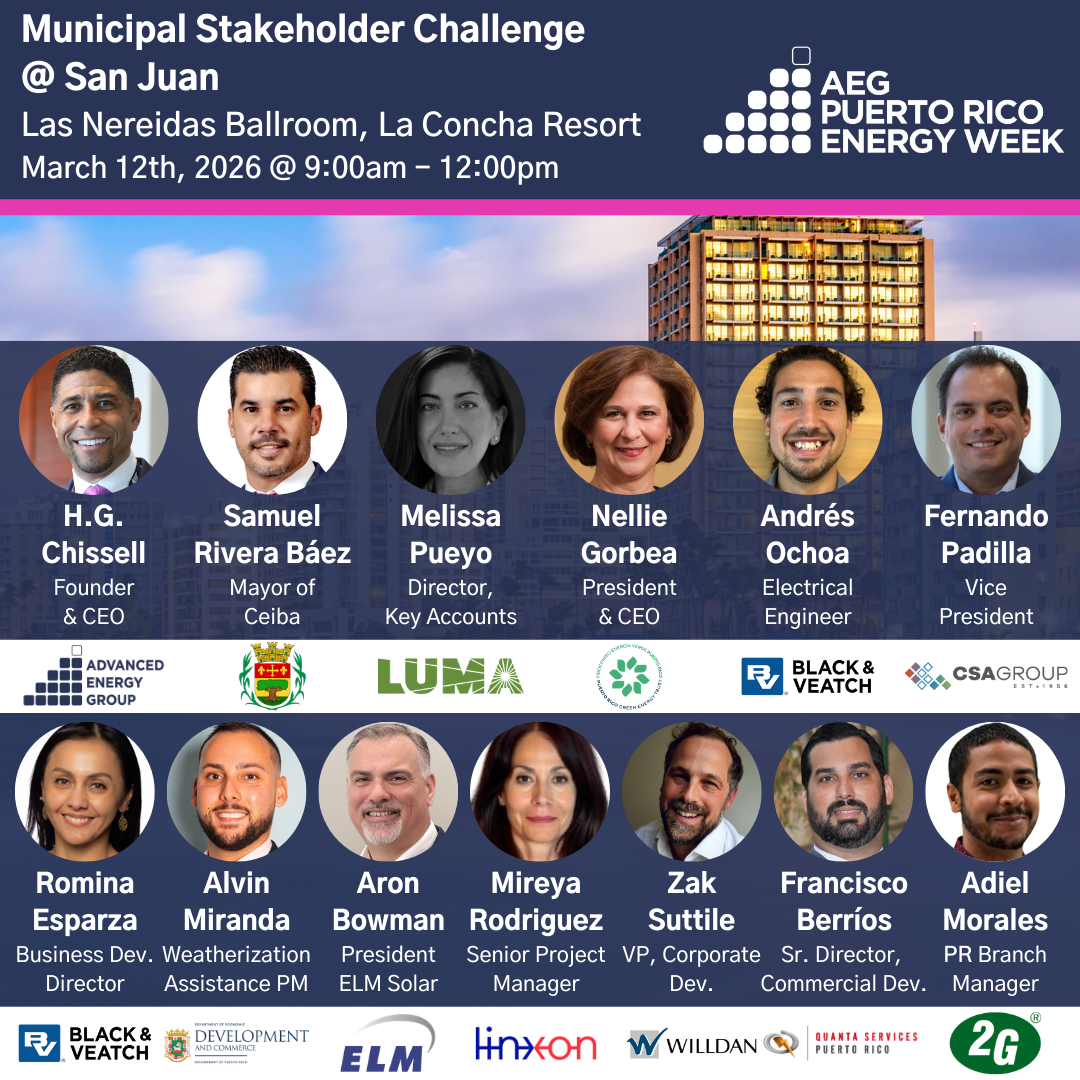
Held on March 12th, 2026 at La Concha Resort, one hundred public and private industry leaders convened for the AEG Puerto Rico Energy Week Municipal Action Challenge. The purpose of this challenge was to: 1.) Align on a critical obstacle regarding energy, prosperity and resilience for Puerto Rico at the municipal level; 2.) Engage as cross sector teams to agree on a 90-day sprint and 12-month goal; 3.) Empower leaders to deliver the solution and present the outcome in 12 months.
H.G. Chissell, Founder & CEO, Advanced Energy Group provided opening remarks to help frame the discussion. Samuel Rivera Baez, Mayor of Ceiba, was present to share brief remarks regarding the importance, and need for collaboration to achieve energy, prosperity, and resilience goals from a Municipality perspective. Stakeholders agreed to share the findings from this Municipal Action Challenge with the Mayor of Ceiba, and ultimately find ways to collaborate moving forward.
The Opening Remarks were followed by the Speaker Challenge, where each speaker provided a presentation that concluded with this completed statement: "At the municipal level, to achieve energy, prosperity and resilience goals, a critical obstacle to collectively overcome in 12 months is _________."
5 Key Themes
1. Standardizing Vegetation Management as a Critical Priority
Vegetation contact is responsible for over 50% of island-wide outages. Because the tropical climate leads to a year-round growing season that rapidly re-closes cleared corridors, clearing hazardous growth is not a one-time task but a continuous requirement for grid stability.
"At the municipal level, to achieve energy, prosperity and resilience goals, a critical obstacle to collectively overcome is municipal collaboration [in] Vegetation Control." - Andrés Ochoa, Electrical Engineer, Black & Veatch
2. Creating a Formal Operational Framework for Coordination
The current energy landscape is described as fragmented, with municipalities often lacking the technical resources to navigate complex regulatory pathways. Establishing a clear framework is essential to align the priorities of utilities, federal agencies, and local governments.
"Puerto Rico's energy transition will ultimately succeed or fail at the municipal level, where infrastructure projects, community needs, and policy decisions converge." - Melissa Pueyo Sanchez, Director of Key Accounts, LUMA
3. Transitioning from Federal Reliance to Private Capital
Transitioning from Federal Reliance to Private Capital Puerto Rico is undergoing a paradigm shift as clean energy transition investment has reached a record $2.3 trillion globally in 2025. Municipalities must pivot from a traditional reliance on federal grants toward investment-based models that leverage private capital and shared-risk partnerships to ensure long-term project sustainability.
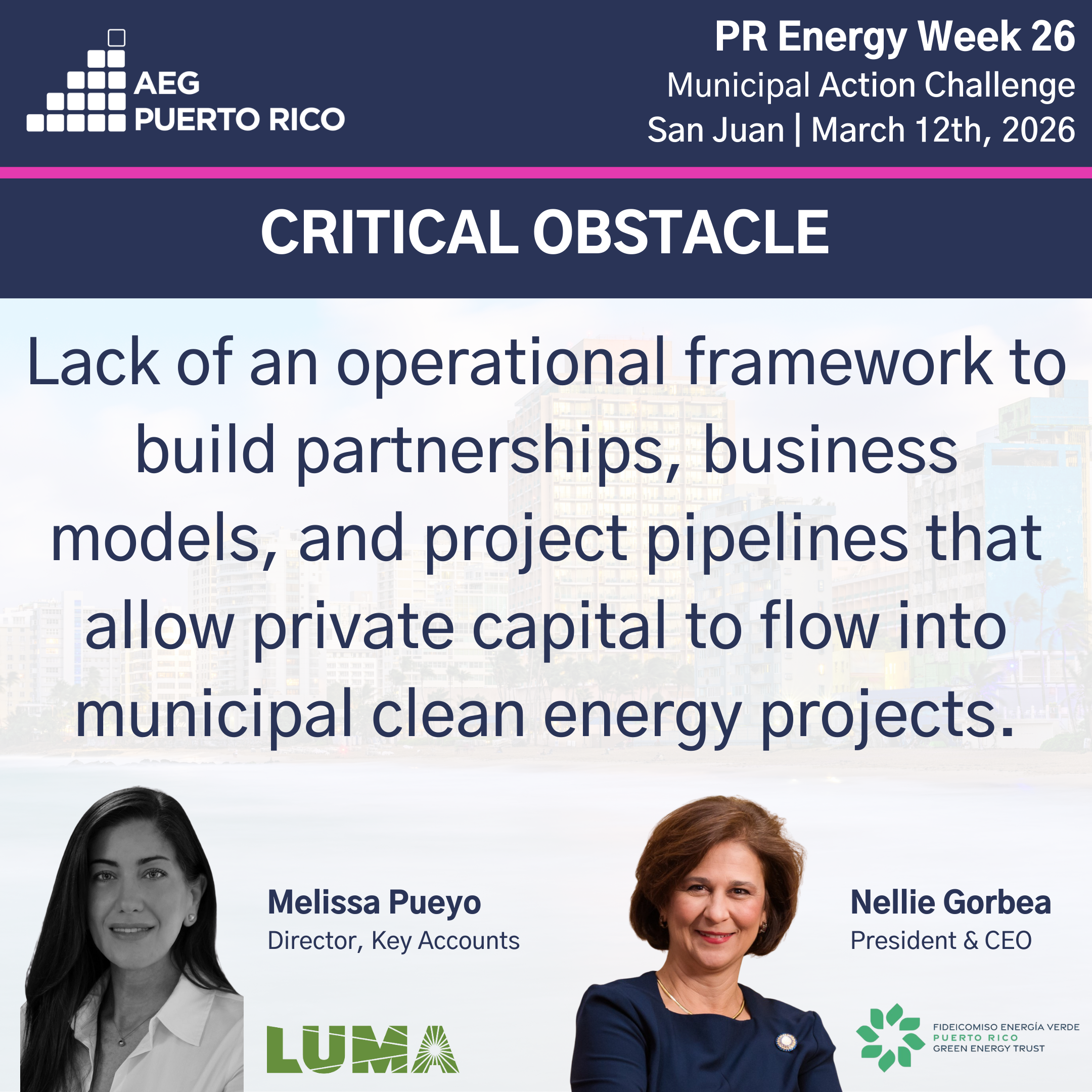
"A critical obstacle to collectively overcome in 12 months is building the partnerships, business models, and project pipelines that allow private capital to flow into municipal clean energy projects."- Nellie Gorbea, President & CEO, Puerto Rico Green Energy Trust
4. Developing "Investment-Ready" Project Pipelines
A major barrier to progress is that many municipal projects currently lack the technical development and financial structuring that private investors require. Over the next 12 months, the focus must shift to building a credible pipeline of projects that are visible to national financing partners.
"Municipal clean energy projects are often not ready to attract private investment." - Nellie Gorbea, President & CEO, Puerto Rico Green Energy Trust
5. Strengthening Social Equity through Reliable Energy
Reliable energy is framed as more than just a utility; it is the fundamental "backbone" required for economic growth and the fulfillment of basic needs like healthcare and education. Success is defined by the ability to empower local voices and ensure that transition benefits, such as affordable solar, reach low-to-moderate-income households.
"Reliable energy is not just a utility... [it] is the backbone of economic growth, social equity, and resilience." - Andrés Ochoa, Electrical Engineer, Black & Veatch
Inspired by the statement provided by Nellie Gorbea (PRGET) and Melissa Pueyo (LUMA Energy), participants agreed to prioritize this selected obstacle statement: “Lack of an operational framework to build partnerships, business models, and project pipelines that allow private capital flow to flow into municipal clean energy projects.” Participants then designed, and pitched a 90-day sprint and 12-month goal to best address this critical obstacle.
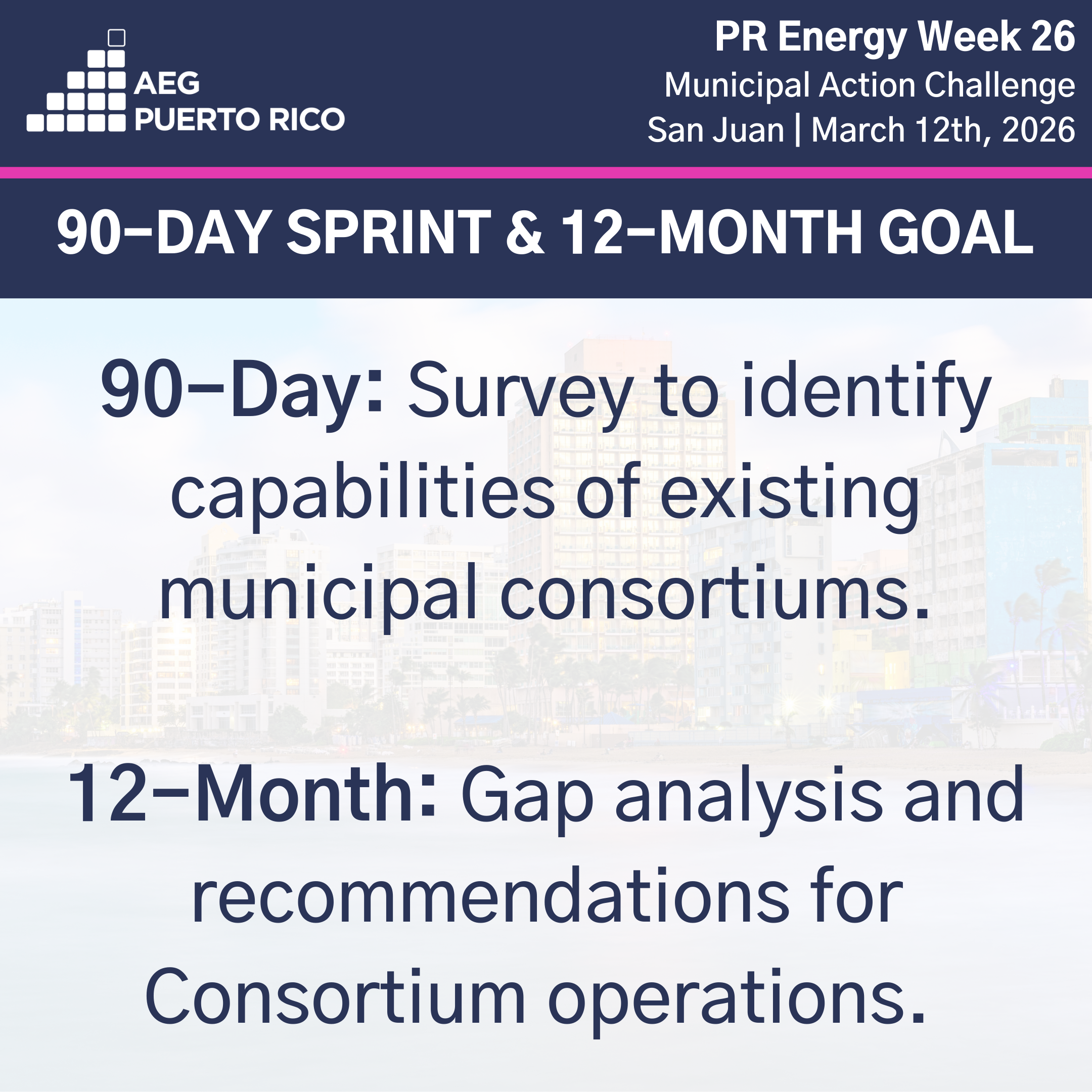
13 leaders formed a volunteer Task Force to complete a 90-day sprint and 12-month goal:
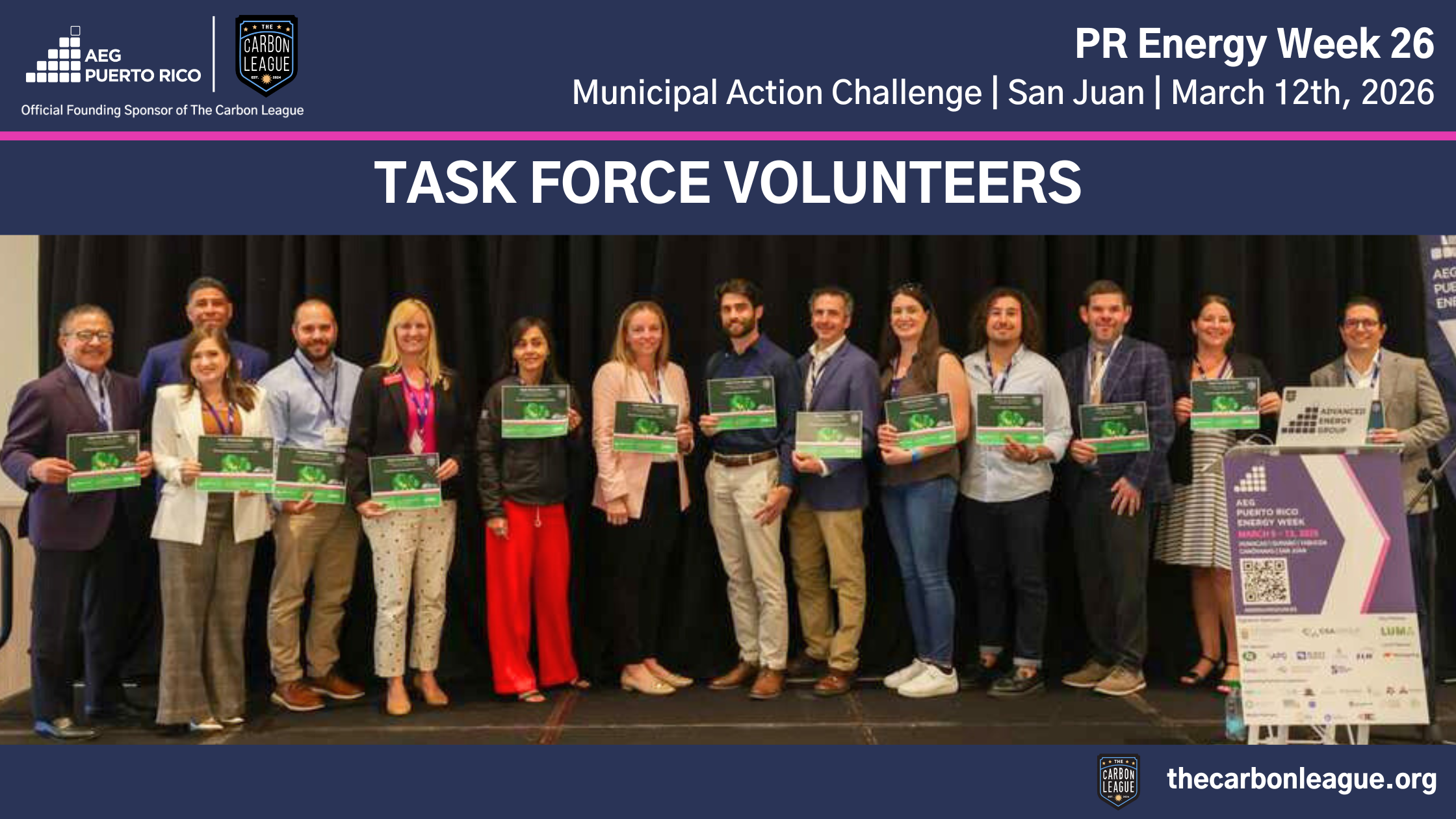
Task Force Volunteers: Romina Esparza Almaraz, Black & VeatchAndrés Ochoa, Black & Veatch, Lee White, Linxon, Marisol Bonnet, PR Green Energy Trust, Ignacio Montañez, Banco Popular, Paul Mutolo, Abruña Energy Initiative, Cornell University, Danielle Hanes, Abruña Energy Initiative, Cornell University, Adam Eberwein, EarthSpark International, Luis Costa Agosto, Kimley-Horn and Associates, Inc, Melibe Thomas, Kimley-Horn and Associates, Inc, Eileen Vélez-Vega, Kimley-Horn and Associates, Inc., Loraine Torres-Castro, Sandia National Laboratories, Tess Williams, Viridi Parente, Inc.
To join this group of volunteers, please contact us at info@goadvancedenergy.com.
Conclusion
The PR Energy Week 26 Municipal Action Challenge convened municipal leaders, utility representatives, private investors, and infrastructure experts to confront the most urgent barriers to energy, prosperity, and resilience across the island. Discussions underscored the critical need to move from traditional federal grant dependency toward private investment-based models, establish a clear operational framework for inter-agency coordination, and prioritize aggressive vegetation management to secure grid stability. Key themes included transforming hazardous "race against time" vegetation corridors into manageable municipal assets, aligning local project pipelines with global clean energy capital, and leveraging community-centric solutions to ensure that reliable energy serves as the backbone for social equity and economic growth. As stakeholders advance a 90-day sprint and 12-month roadmap, their work will be critical to proving that a coordinated, investment-ready approach can deliver a brighter, stronger, and more resilient energy future for Puerto Rico.
Advanced Energy Group is a sponsor supported organization that facilitates quarterly challenges for high-impact stakeholders to deliver on health, energy and prosperity commitments for U.S. cities and vulnerable regions. To become an AEG Sponsor, learn more here: https://aeg.team/engage