Executive Summary: May 8th TCL New York Task Force Roundtable: Enabling Resilient Critical Infrastructure for Communities
Overview
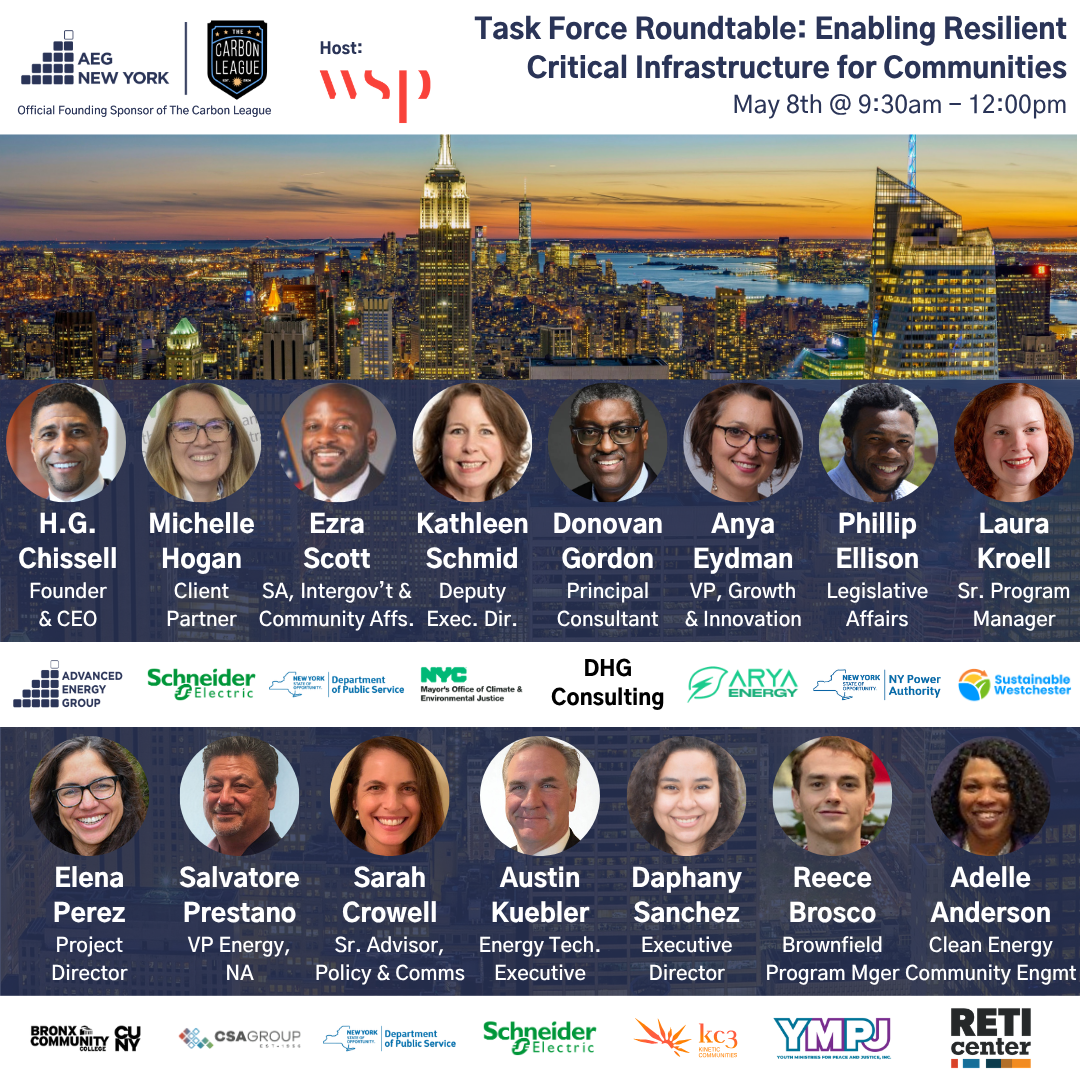
Held on May 8th, 2026 at WSP USA in New York, fifty-four public and private industry leaders convened for the Task Force Roundtable: Enabling Resilient Critical Infrastructure for Communities. The purpose of this Roundtable was to bring together grid asset owners, community stakeholders, regulators, nonprofits, environmental advocates, and private sector leaders to advance implementation priorities across New York’s infrastructure ecosystem, and align on the Task Force’s next 90-day sprint.
H.G. Chissell, Founder & CEO, Advanced Energy Group and Kathleen Schmid, Deputy Executive Director, NYC MOCEJ provided opening remarks to frame the discussion. Michelle Hogan, Client Partner, Schneider Electric, and Anya Eydman (Arya Energy Solutions) provided an overview of the task force to explain the critical obstacle, and the agreed 90-day sprint and 12-month goal, and accomplishments to date.
Task Force Summary & 90-Day Sprint Accomplishments
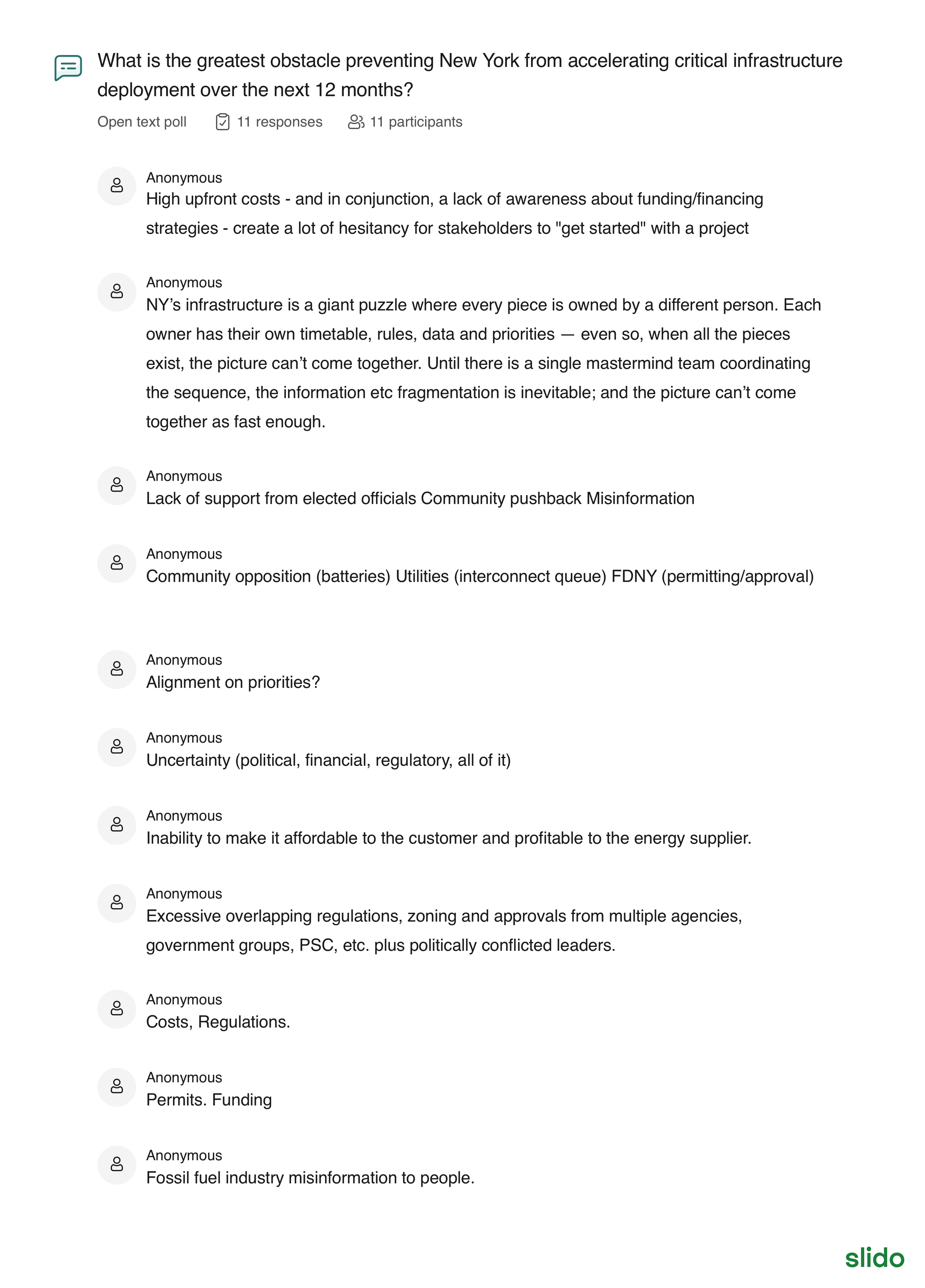
The AEG New York 26Q1 Task Force consisting of 16 public and private stakeholders, was formed in January 2026 to address a critical obstacle presented by Nelson Yip (Con Edison), Daniella Piper, PE (NYPA), and Sarah Crowell, AICP (NYS Department of Public Service):
"Better and faster coordination with other asset and infrastructure owners to identify actionable policies and opportunities for cross-collaboration that builds trust and benefits communities."
The Task Force completed its first 90-day sprint with this Roundtable, successfully aligning diverse stakeholders on implementation priorities. While the convening validated high market interest, the team identified a critical need to transition from broad discussion toward focused, case-study-driven execution to avoid "analysis paralysis."
5 Key Themes
1. Community Trust as Core Barrier
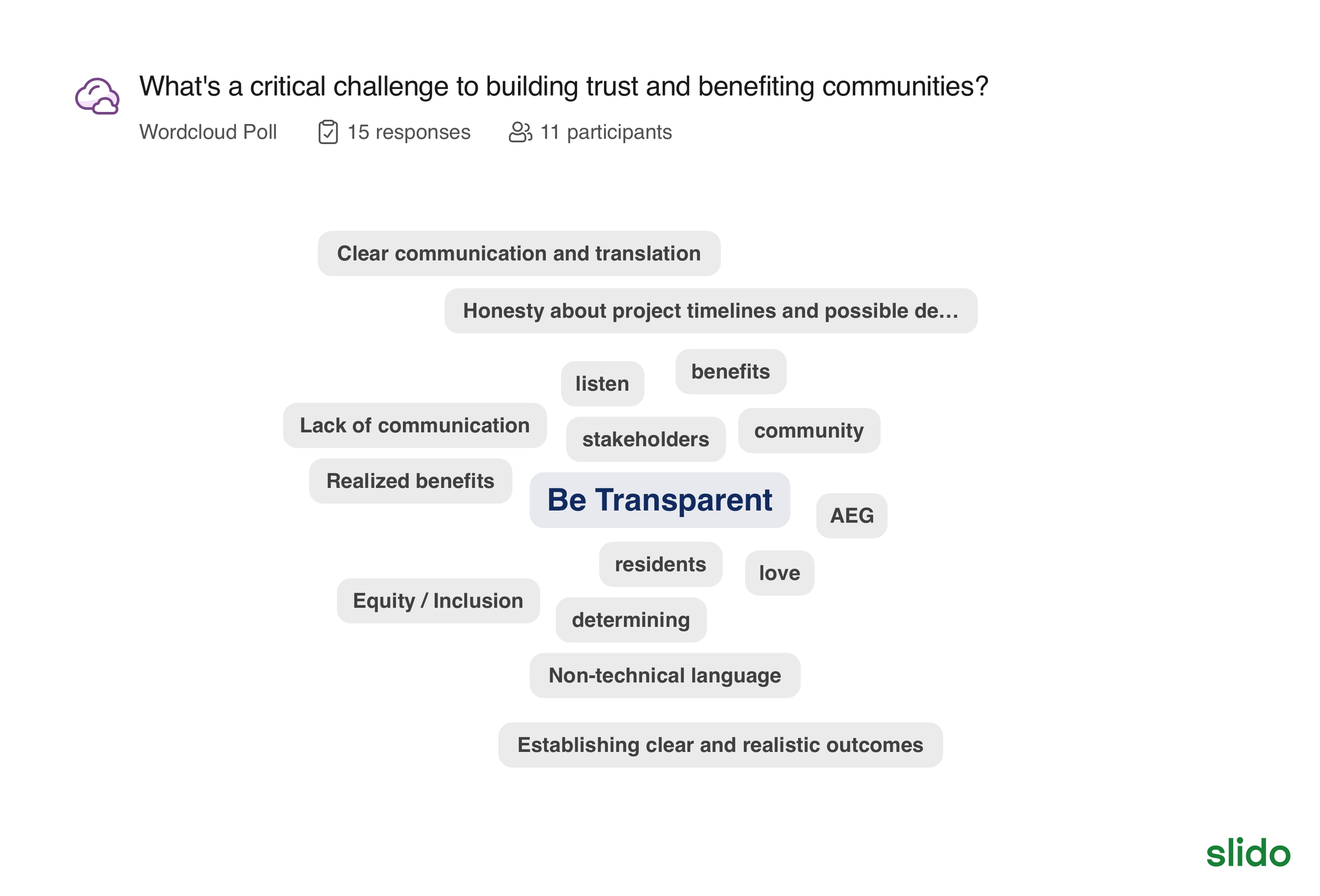
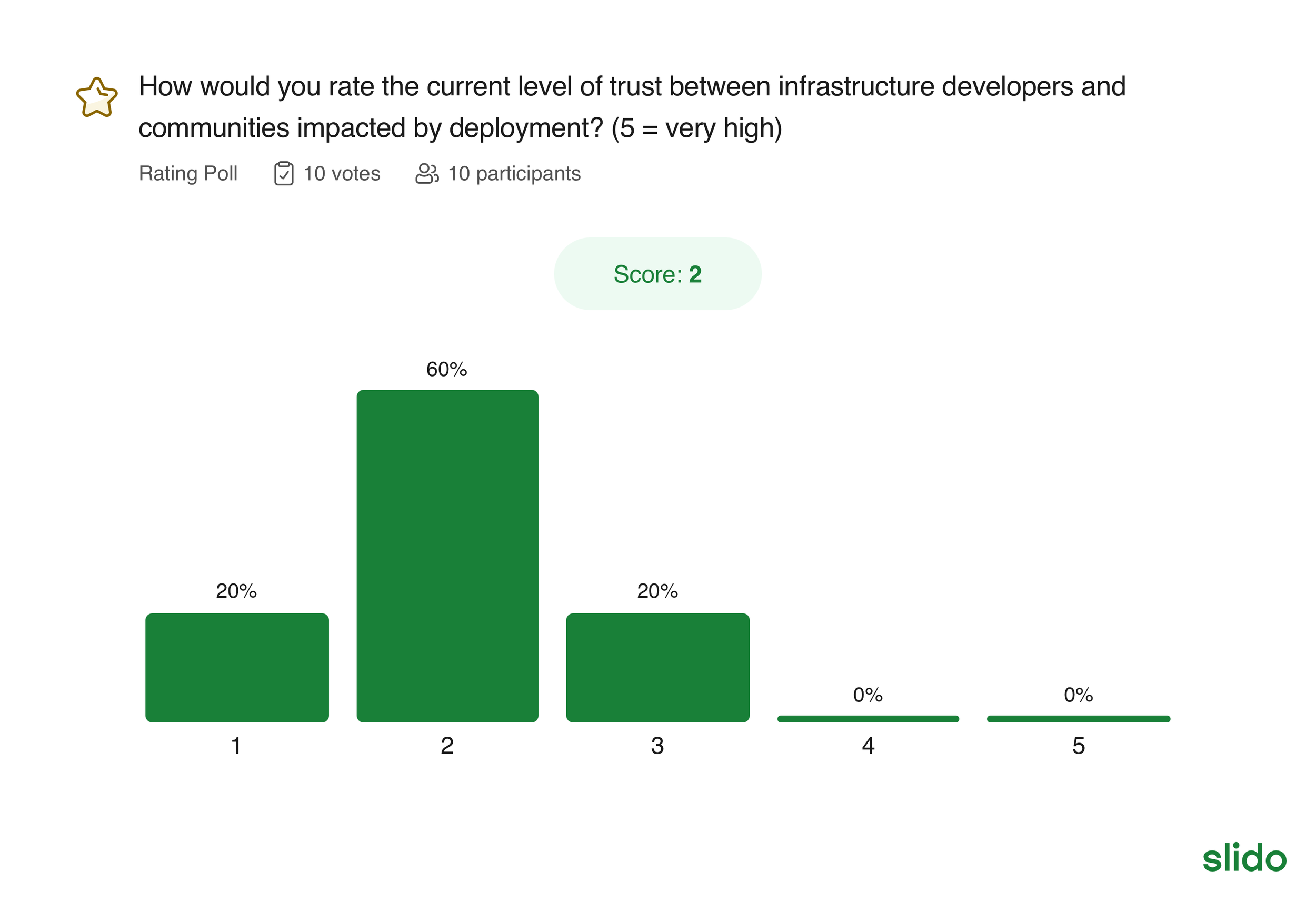
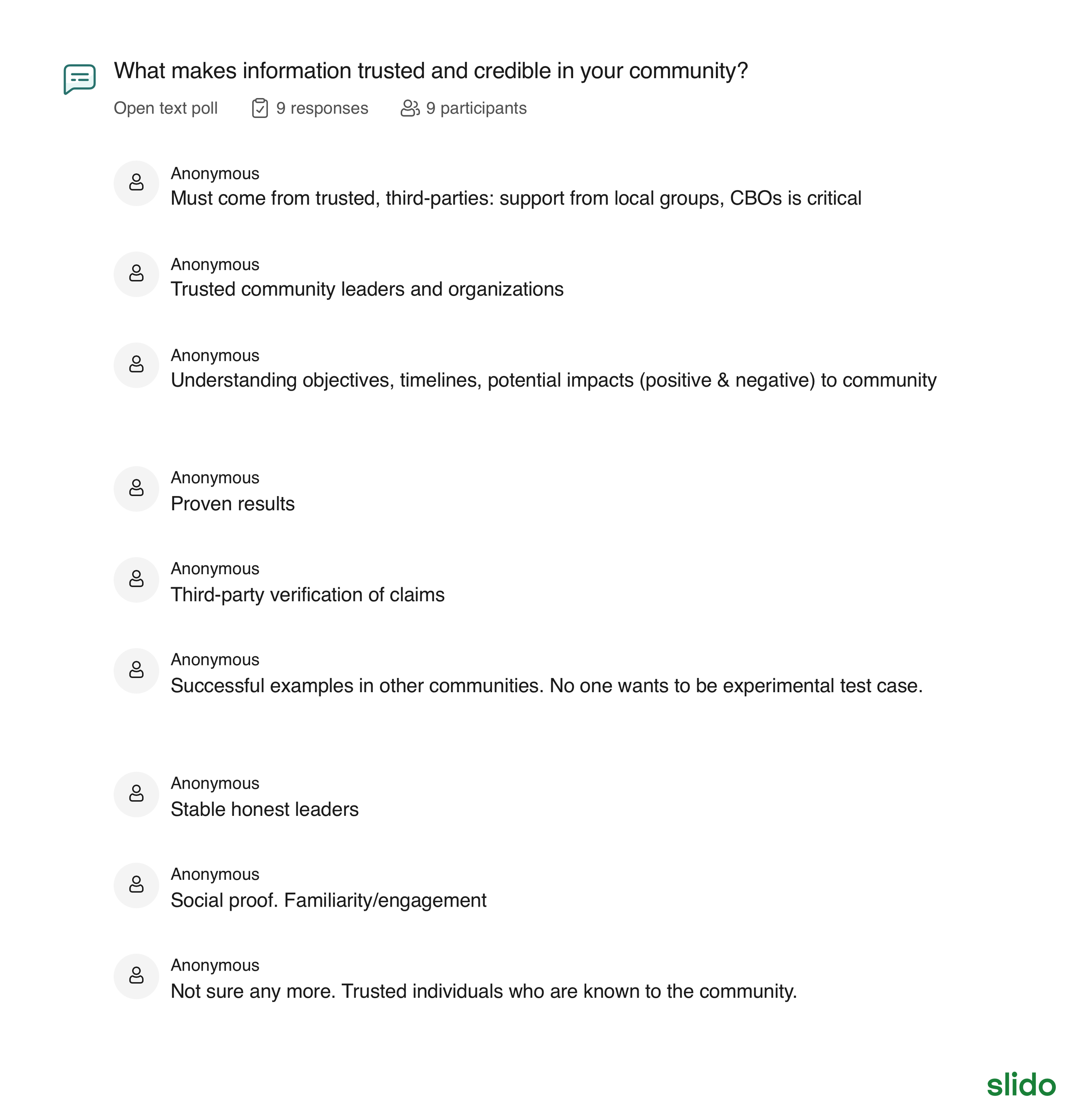
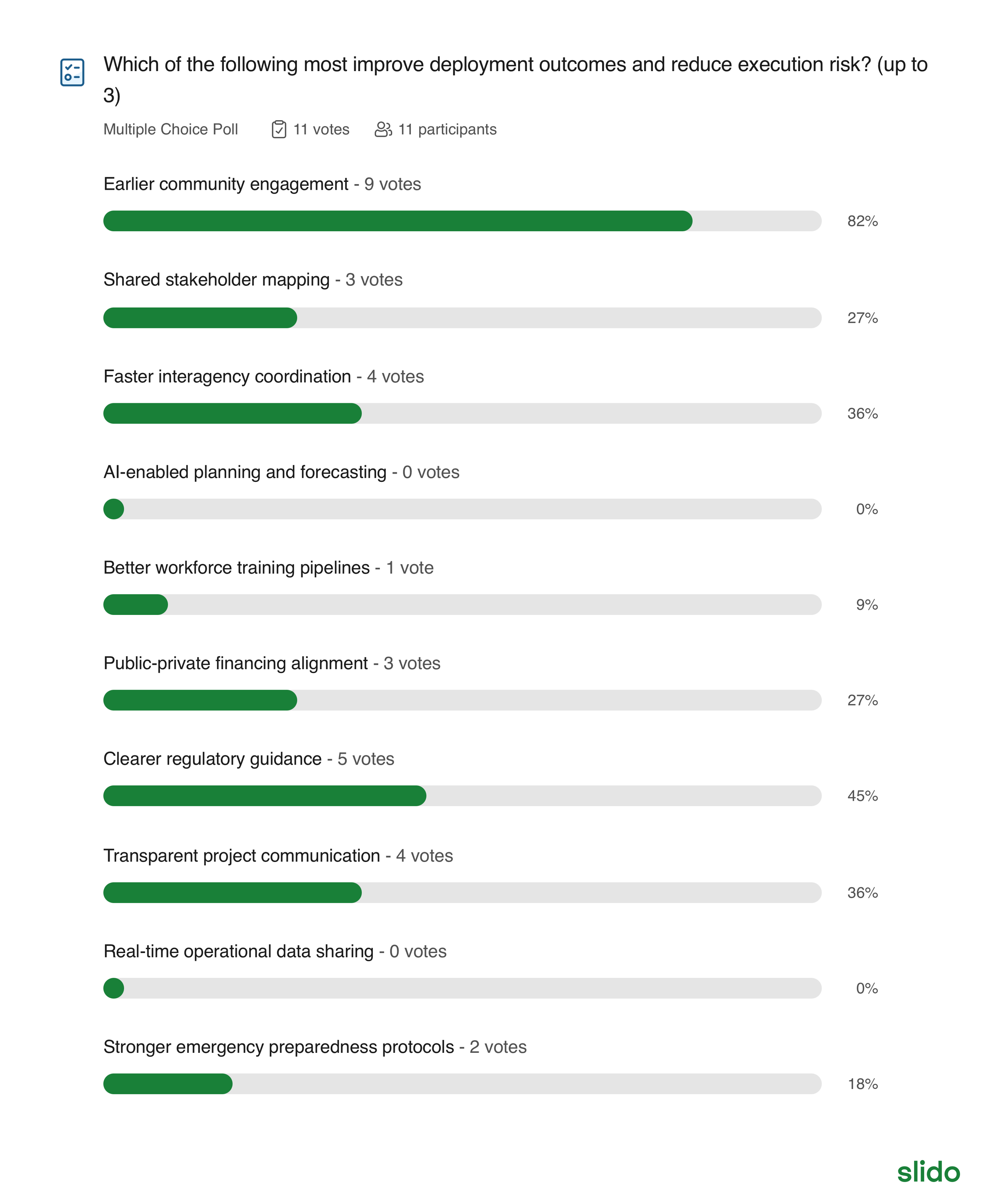
There is strong alignment that the primary barrier to project success is lack of trust, not technology. "Social risk" often stalls project timelines by up to 25%. To address this, the group proposed a Community Trust Building Checklist or a broader Best Practices Playbook. Communication must be simplified and inclusive, moving toward "Deep Listening" models that map the entire "system of decision-making."
"Projects don't stall because of technology. They stall at the point where infrastructure meets people." — Anya Eydman, ARYA Energy
2. Workforce Development & Economic Opportunity
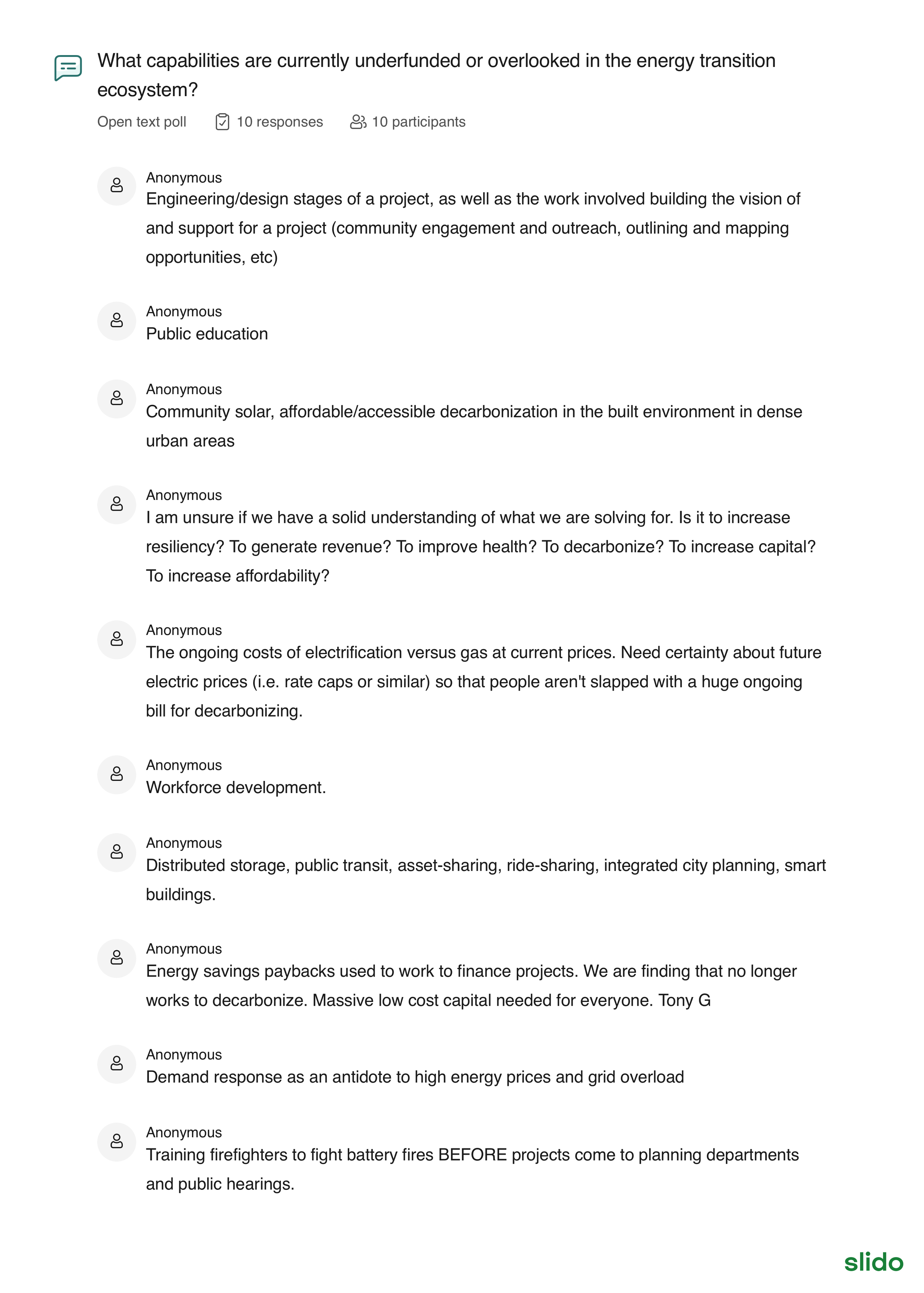
There is a vital need to connect infrastructure to training pathways in solar, electrification, and offshore wind. Workforce development is viewed as equally important as trust frameworks; communities must have funded pathways to "high-road" jobs by removing hiring barriers like degree requirements.
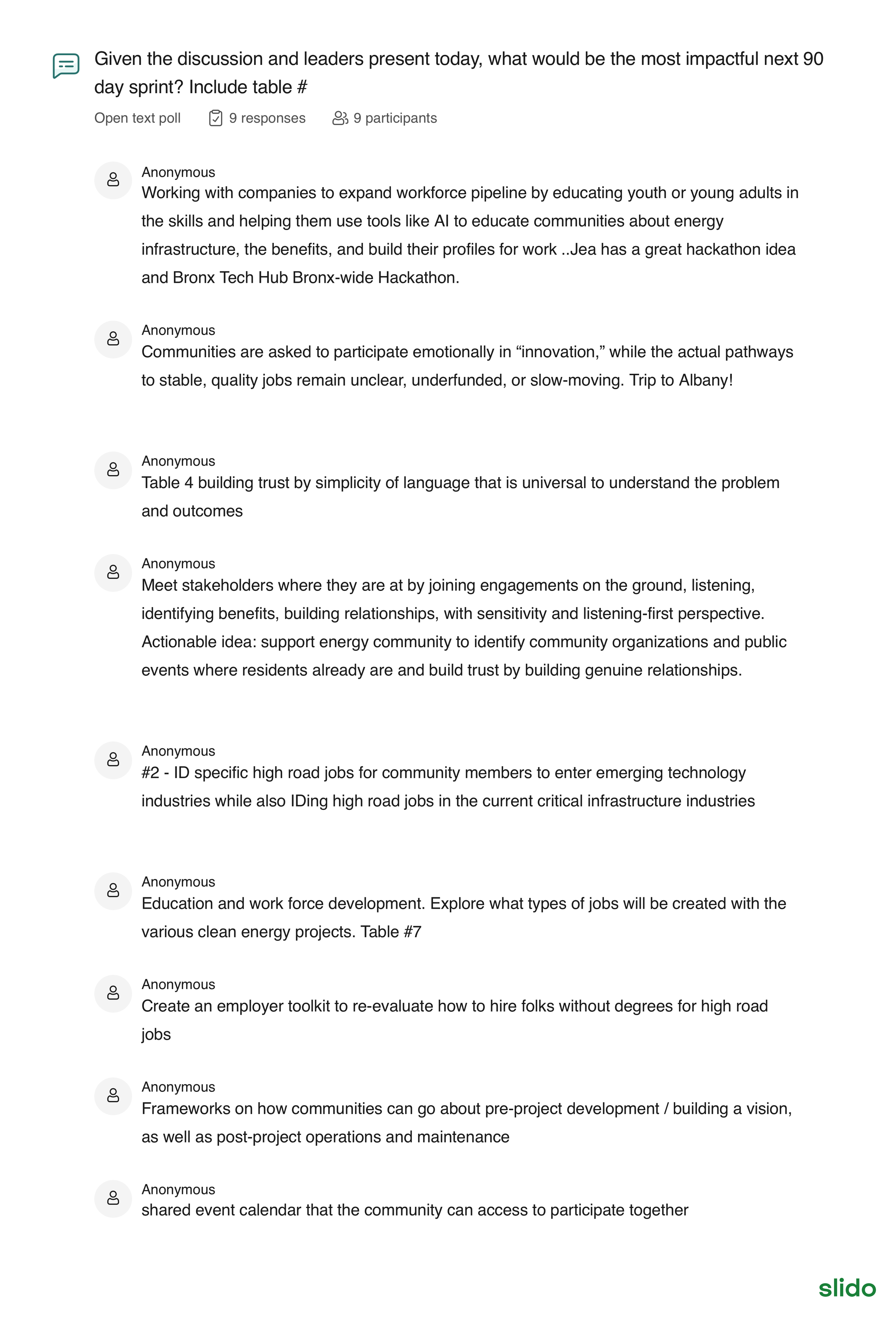
"ID specific high road jobs for community members to enter emerging technology industries while also IDing high road jobs in the current critical infrastructure industries." — Task Force Convening Participants
3. Youth Engagement & Education
This theme emphasizes engaging students and young professionals through early exposure to infrastructure careers and project-based learning. There is significant interest in integrating youth into both direct learning and broader community education efforts. This ensures the next generation is ready to handle the 50–90% growth in demand expected over the next two decades.
Key Insight: Engaging young professionals ensures the long-term sustainability of the workforce and helps translate complex energy "backbone" concepts for the broader public.
4. Experiential Models (Hackathons & Programs)
There is a clear opportunity to move beyond discussion into applied, hands-on engagement models that connect learning with real-world challenges. Specific examples include hackathons, climate tech training academies, and certification platforms. These models facilitate regional collaboration, bridging the gap between state policy and local municipal action by meeting stakeholders "on the ground."
"Meet stakeholders where they are at by joining engagements on the ground, listening, identifying benefits, [and] building relationships with sensitivity and listening-first perspective." — Task Force Convening Participants
5. Infrastructure Modernization & Grid Stability
The physical "backbone" of the system requires urgent updates, as 80% of transmission infrastructure was built before the 1980s. To prevent "reliability violations," the state must deploy District-Scale Thermal Energy Networks and Geothermal Heat Pumps. These systems can reduce base load and peak demand by 40% to 60%, alleviating pressure on constrained urban grids.
"Transmission is the backbone of energy delivery - moving power from where it is made to where it is used." — Phillip Ellison, Legislative & Stakeholder Affairs, NYPA
Conclusion & Next Steps
The AEG New York 26Q1 Task Force successfully navigated its initial 90-day sprint, validating a profound regional commitment to infrastructure resilience. However, the next phase requires a pivot toward tactical, case-study-driven execution. In the upcoming 90-day sprint, the Task Force will:
Consult Priority Partners: Engage in deep-dive discussions with 3–6 key stakeholders (including YMPJ, KC3, and MOCEJ) to test deliverable ideas.
Finalize One Actionable Deliverable: Synthesize Roundtable data to narrow focus (e.g., the Best Practices Playbook or a Workforce Toolkit).
Coordinate Outreach: Facilitate one-on-one and small group conversations to ensure the final output is useful and validated by the broader New York ecosystem.
This strategy ensures that as New York modernizes its energy backbone, it does so through a framework that prioritizes community trust and shared economic prosperity.
Advanced Energy Group is a sponsor supported organization that facilitates quarterly challenges for high-impact stakeholders to deliver on health, energy and prosperity commitments for U.S. cities and vulnerable regions. To become an AEG Sponsor, learn more here: https://aeg.team/engage
Appendix: